Pages

Showing posts with label Science. Show all posts

Monday, 31 August 2020

Science Work

 Last week in Science we done an experiment on Wind Cars. The distance of the race was 9 meters and our time was 8.56 seconds. We had to divide the time divided by the length of the race. The final result was 1.05140186916 m/s. 


To make it go faster we could've put made the sail point out, make the sail bigger and use less tape.

Friday, 21 August 2020

Science Experiment

 Today in science we done an experiment on eggs. Our goal for the experiment was to try not to break the egg. We had some equipment to help us succeed. 

Equipment: 

  • Egg
  • Bubble Wrap
  • Newspaper
  • Wooden sticks
  • Cotton 

Method: 
  1. First we had to grab an egg and make our creation.
  2. Next we had to walk up the stairs and get ready to drop it.
  3. Then we dropped the egg.
  4. Finally we walked back to the science lab and got our result.
Overall ours went pretty good cause the egg didn't crack.

Wednesday, 17 June 2020

Crystal and Acid Rain

In Science we have been doing an experiment about Crystals.

  1. Add 20 mL of sulfuric acid to a 100 mL beaker. Heat the acid until it reaches 70 C.
  2. Once heated, use a spatula to add pea-sized portions of copper oxide to the beaker. Stir the mixture for 30 seconds.
  3. Repeat step 2 until no more will dissolve. Allow the beaker to cool.
  4. Fold the filter paper and place it in the funnel. Place the filter funnel into the second beaker.
  5. Make sure the beaker is cool enough to hold at the top. The contents should till be hot. You may need your teacher.
  6. Gently swirl the contents of the beaker to mix, and then pour into the filter paper in the funnel. Allow to filter through.
  7. Rinse the beaker you used to heat the mixture previously, and place it back on top of your tripod filled with 50-60 mL of water.
  8. Place the evaporating basin on top of the beaker and carefully pour some of the solution from the beaker into the evaporating basin.
  9. Gently heat the beaker until the solution in the evaporating basin has reduced by half.
  10. Leave the evaporating basin to cool. 

How does Acid Rain affect coral reefs: It make the water too acidic and it affects sealife.


Friday, 22 May 2020

Science Experiment

In Science we done an experiment about Oil of Wintergreen. 

  1. Weigh 0.25 grams of salicylic acid into a 10-15 cm test tube.
  2. Add 2.0 ml of methanol to the test tube and swirl until the solid dissolves.
  3. Slowly add 10 drops of sulfuric acid.
  4. Place the test tube in a hot water bath and secure by using a utility clamp and heat for 15 minutes.
  5. Cool the test tube in running water.
  6. Smell the contents by wafting and record any observations. 

Wednesday, 11 March 2020

Smoking Vs Vaping

In Science this week we have been learning about how bad smoking and vaping is for you. We watched a video of smoking vs vaping and seeing whats worse for you. The things that they used for the experiment on the video was cotton balls, tubes and then vapes and smokes. At the end of the video the cotton balls in the smokes tube were all brown and then the cotton balls in the vape tube were still white.

In conclusion, both of these are very bad for you and your lungs so I advise you to not use either of them.

Image result for vapeImage result for cigarettes

Tuesday, 15 October 2019

Origami

What is it's everyday and scientific name: Tulip

Where is your plant found, is it native to this country, is it used for anything: Central Asia and Turkey

Label 5 parts of the plant:

Roots: The bottom is the roots. The roots stay in the ground to keep the plant growing.

Stalk: The next part is the stalk. The stalk is the part of the plant that holds all of it up.

Leaves: The leaves use Photosynthesis, they regulate Oxygen, carbon dioxide and water vapour.

Strawberry Seed: The Strawberry Seed's function is to help the strawberry grow on the plant.

Strawberry: The function of the Strawberry is to grow and then pick them to eat.


Thursday, 4 July 2019

Sherbet

On Tuesday in Science our class made Sherbet. We all made one individually


Ingredients: Baking Soda, Citric Acid, Tartaric Acid, Icing Sugar, Raro.

Aim: My aim was to not have it to sour but not have it to sweet.

Method: First I grabbed a plastic bag and a ice cream stick and put some Citric acid in, next I put in some Tartaric. After that I put in a spoon of Icing sugar and then I put in some blackcurrant Raro. I forgot the Baking Soda but I still liked it.

Image result for sherbet

Friday, 7 June 2019

Eye Dissection Experiment


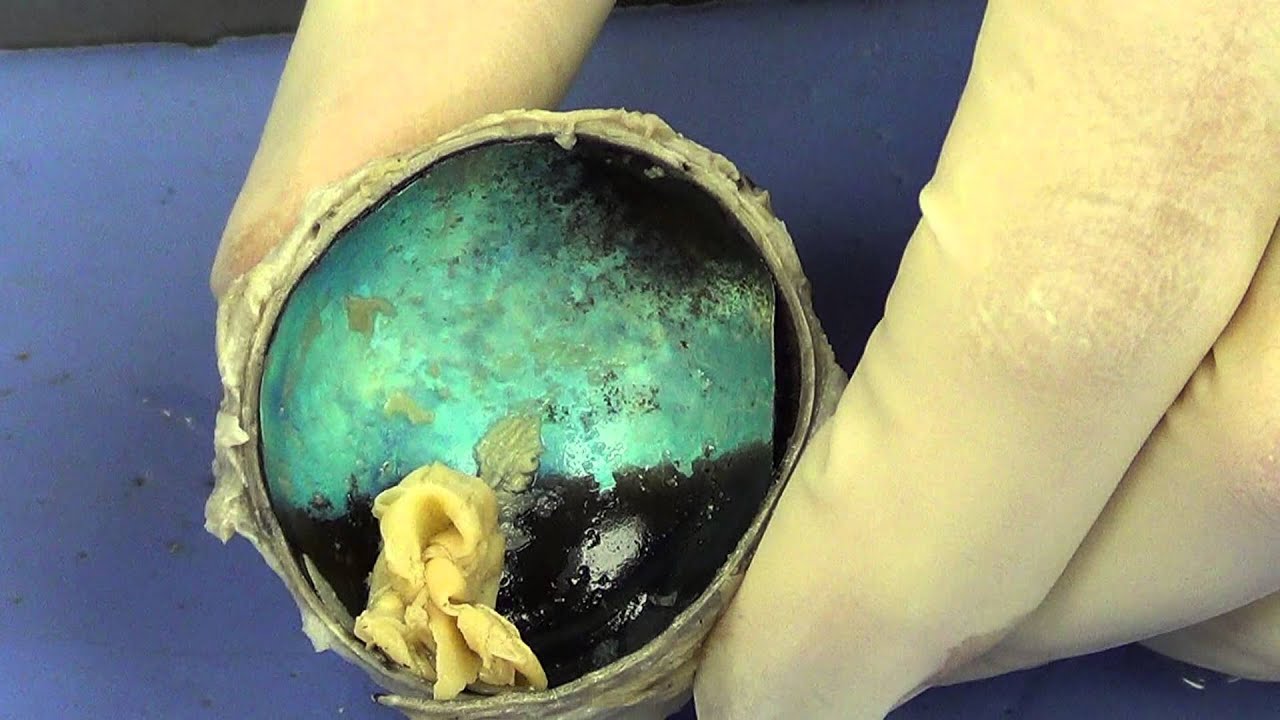
Yesterday in Science we dissected a cow eye. This is a picture of a cow eye.Image result for cow eye dissection

Aim: To find out about the structure of an eye.

Method:

  1. First we cut all of the fat off the eye.
  2. Next we poked a hole into the eye and then all of the black liquid came pouring out, the liquid was Vitreous Humor.
  3. Then we cut the eye in half to see what we could find inside the middle (Lens, Vitreous Humor and the Retina).
  4. After that I started Squishing the eye so that the liquid would come out.
Results: We successfully cut the eye open and found all of the different parts of it.

What I Learnt: I learnt all of the parts of the eye, I only knew that their was a pupil and a Iris. The Iris is the coloured part of the eye, the Retina detects light and the Pupil in the black hole in the middle of the eye.


Friday, 16 February 2018

Science in the Lab

Today we were learning about stuff in science. One of the activities was wondering why the Police separate the witnesses at a crime or accident. This is my reason why I think that.

Monday, 5 February 2018

Lab Safety

Today we were learning about safety in Science with Mr Kane. One thing is when your doing an experiment put safety glasses on. Another thing is to put your bags under your desk and keep them there. Something else is when you have your Bunsen burner on, you need a mat underneath it. Never sit on the tables and don't spill chemicals.

Tuesday, 7 November 2017

The Science of Art

Plan:

Aim:  Make different fake blood methods.

MAKE IT: Combine 1 cup corn syrup with 2 tablespoons chocolate syrup. Stir in red food coloring until you get a deep red color (we used about 8 drops).

Recipe 1:

Ingredients:
Choc Syrup
Red Food Coloring

What were making: Fake Blood

Ingredients:
Sprite
Cocoa
Red Food Coloring
Gauze Mat
Tripod
Heat Mat
Beaker
Bunsen burner

Method:
1. Lay down a heat mat and then put a Tripod and Gauze mat on in.
2. Get a beaker and put it on the Gauze mat.
3. Then get a Bunsen burner and attach it to the gas tap.
4. Next you turn the gas tap on and light the Bunsen burner.
5. Finally you wait for the Lemonade to evaporate. 

The Experiment:
The experiment is going quite well even though it is taking ages. We are currently evaporating the water of the lemonade.


Results:
I saw fake blood and punching. The blood looked real and so did the punches. 


Discussion: 
So we made videos about fake blood with people punching.


Evaluation:
The experiment went good because we completed our videos and we had fun.

The success was finishing our videos in time.

The thing that went wrong was Eddy not wanting to put the fake blood in his mouth, it went wrong because he took a long time. We fixed it by him putting it in his mouth.


Tuesday, 22 August 2017

Hauora In Science

Planning: 
Aim- I want to find out how food can go moldy.
Method:
  1. Wash your hands with soap for a reasonable amount of time. (30 seconds)
  2. Get a pair of plastic gloves on. (On Hands)
  3. Get two pieces of bread. (Same type)
  4. Put the two pieces of bread on an Agar Plate. (One on each plate)
  5. Have one piece of food unwrapped and the other wrapped up.
  6. See how much days it takes for the first food to mold.


Equipment:
  • Gloves (Plastic)
  • Soap
  • Water
  • Food (Bread)
  • Glad Wrap


Tuesday, 8 August 2017

How to be safe in Science

Planning
Aim: I want to find out how to be safe in Science.
Equipment: Bucket, Detergent, Cold Water, Tube, Gas tap, Safety glasses, lighter.
Method:

1. Get a Bucket.
2. Put in a good squirt of detergent.
3. Fill half the bucket with cold water.
4. Take your loose clothing off, pull your sleeves up, if you have long- tie it up.
5. Connect a tube up to the gas tap and put the other end into the water.
6. Turn on the gas and make some bubbles.
7. Put safety glasses on.
8. Wet your hands and wrists up to your elbows.
9. Get a scoop of bubbles.
10. Hold the bubbles away from your face.
11.  Use a lighter, ignite the bottom of the bubbles.
12. Slowly, open our hands.


Doing
Smelt: It smelt like a burning Erosion of Asparagus.
Felt: It felt like I was going to get burnt because I had fire right in front of my precious face.
Look: It looked like a flame ball about to blow up.
Heard: I could hear a flame blowing up. 

Explaining

How does fire go up? 
A flame goes up because the denser surrounding air pushes it up. A flame consists of gases so hot they glow yellow, orange and red. Hot gases expand and become less dense than the surrounding air. Therefore, the flame is lighter than an equal volume of air.

Where does Adrenaline come from?
Adrenaline and Noradrenaline are two separate but related hormones and Neurotransmitters. They are produced in the medulla of the adrenal glands and in some neurons of the central nervous system. They are released into the bloodstream and serve as chemical mediators, and also convey the nerve impulses various organs.

Why is fire orange?
We see fire because energy is given off in the form of light as well as heat. Fires are commonly hydrocarbons burning in the presence of oxygen, giving rise to fine soot particles that emit yellow light when they burn at around 1,000 degrees Celsius. 


Friday, 4 November 2016

Facts about the Sun, Earth and Moon

For Science we have been learning about how the Sun, Earth and Moon orbit in a system. I learnt that the sun spins slowly and gives light and warmth to it's planets, the earth spins around the sun taking 365 days, it also takes 24 hours to do one spin and it wobbles for seasons and the moon orbits the earth taking 27.5 days and it faces the same way.